Shinsen 神饌 , meaning “deity food offering,” refers to the offerings presented at Shinto shrines, Ofuda or Kamidana (household shrines) to honor the Kami-sama.
Daily Offerings: Water, Rice, and Salt.
On the 1st and 15th of each month Sake is added to the daily offerings.
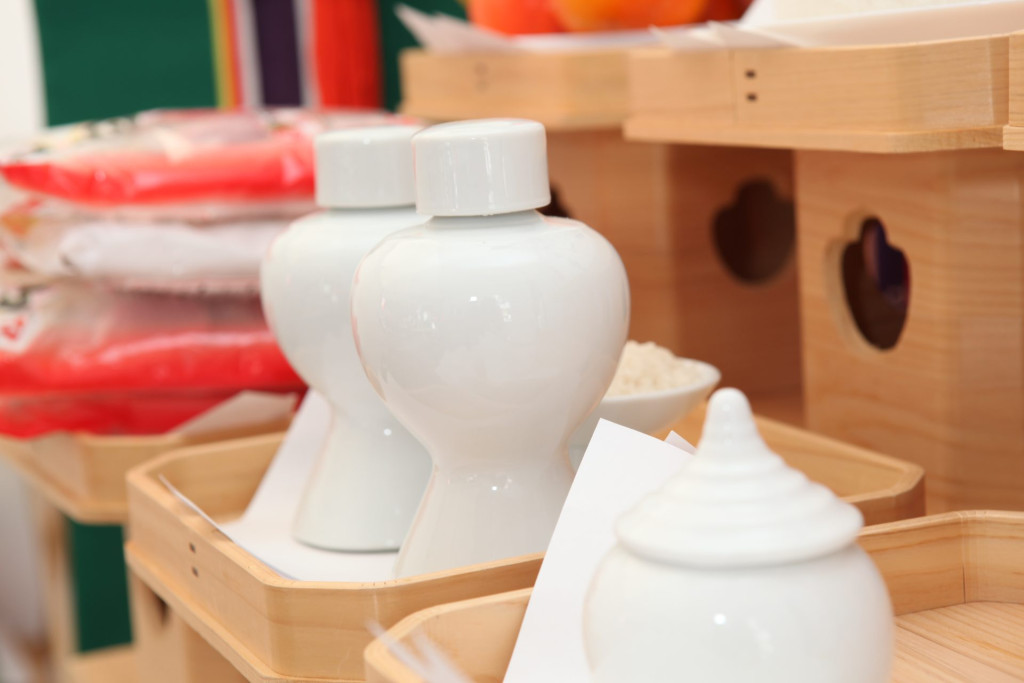
In the morning, carefully prepare the offerings using clean 神器 Shinki, white porcelain vessels used for offerings.
If you do not have Shinki, it is acceptable to use other clean porcelain dishes or vessels. They should be dedicated solely to Kami-sama and should not be used for everyday purposes.
Traditional Shinki consist of:
2 Kawarake 土器 (small plates for rice and salt)
1 Mizutama 水玉 (water vessel)
2 Heishi 瓶子 (sake flasks)
Place the offerings in the following order:
After placing the offerings, it is customary to bow twice, clap twice, and bow once more.
In the evening, the offerings have to be taken down. If you have pets, concerns about insects, or any other reason that makes it difficult to leave offerings out, it is perfectly acceptable to remove the Shinsen shortly after presenting them to Kami-sama.
After removing the Shinsen, the offered food may be eaten as an act of Naorai, receiving the blessings of Kami-sama and sharing in a sense of unity with them. If there are dietary or health concerns, it is not necessary to consume the offerings. You may also share or gift the food to others.
⛔
Please remember: Shinsen should never be left out for multiple days, weeks, or months. Doing so is considered disrespectful to Kami-sama and can also create a serious health risk! Even if you are unable to make daily offerings, it is important to remove the Shinsen at the end of the day on which they were offered.
If you would like to learn more about offerings and caring for a Kamidana or Ofuda, join our Shrine Membership and receive our Membership Handbook with detailed guidance.